From accident to system
Henry Fox Talbot came to photography sideways, frustrated by his own inability to draw while sketching on the shores of Lake Como in 1833. He had been using a camera lucida, the optical aid that projects a scene onto paper, and found the results dispiriting.
When he heard, in January 1839, that Louis Daguerre had announced a fixed photographic image in Paris, Talbot rushed his own experiments into public view — a series of photogenic drawings, objects and scenes contact-printed onto silver chloride paper. They worked, after a fashion, but they were slow and faint.
The calotype came later, in 1840, from a sharper piece of chemistry. Talbot discovered that silver iodide paper, brushed with gallic acid and silver nitrate solution before exposure, developed a latent image invisible until it was coaxed out with more gallic acid after the shutter closed. The exposure dropped from minutes to seconds. He patented the process in 1841 and it became the calotype proper — from the Greek kalos, beautiful, though the name reads today more like a statement of intent than a description of guaranteed results.
The negative and the copy
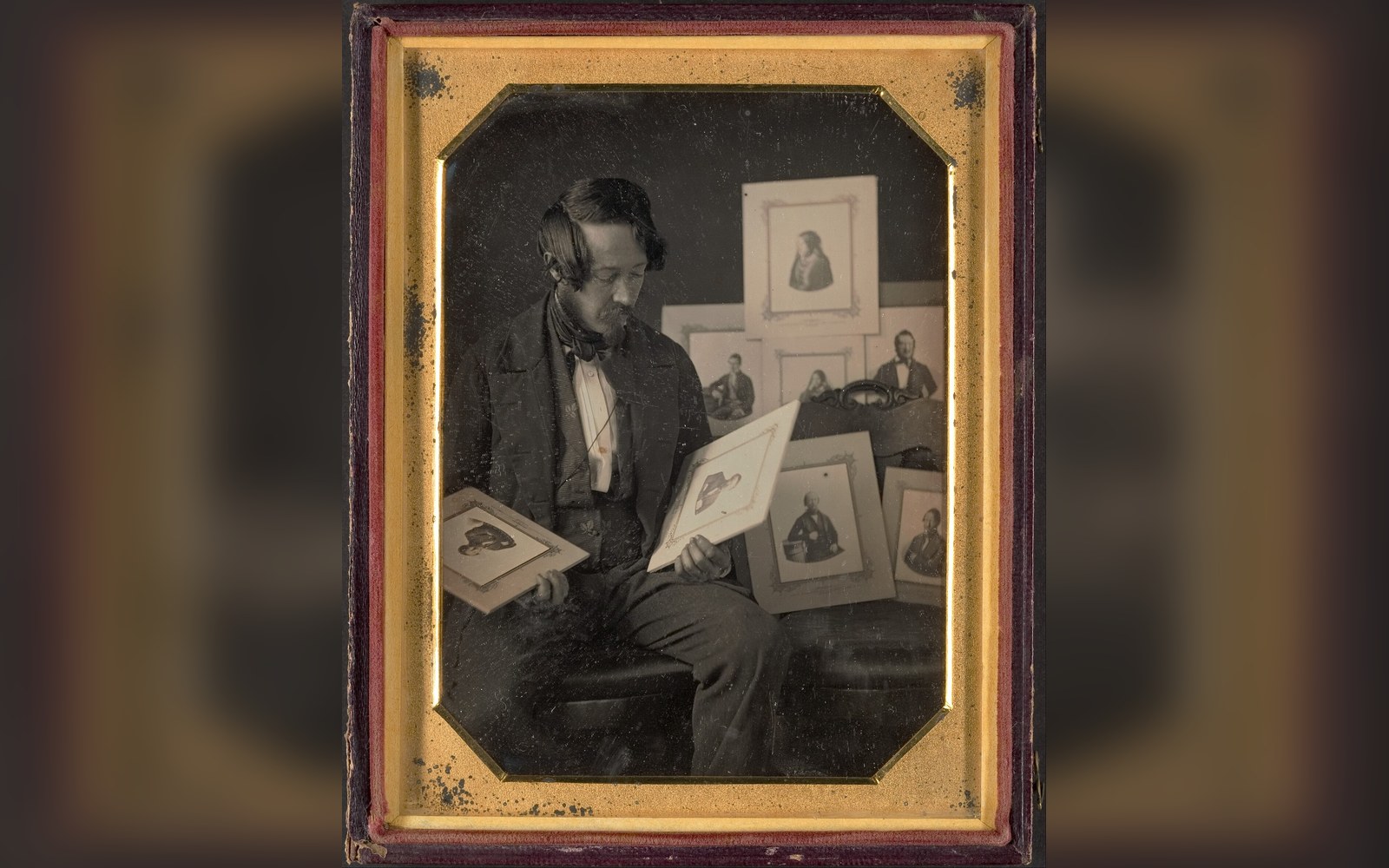
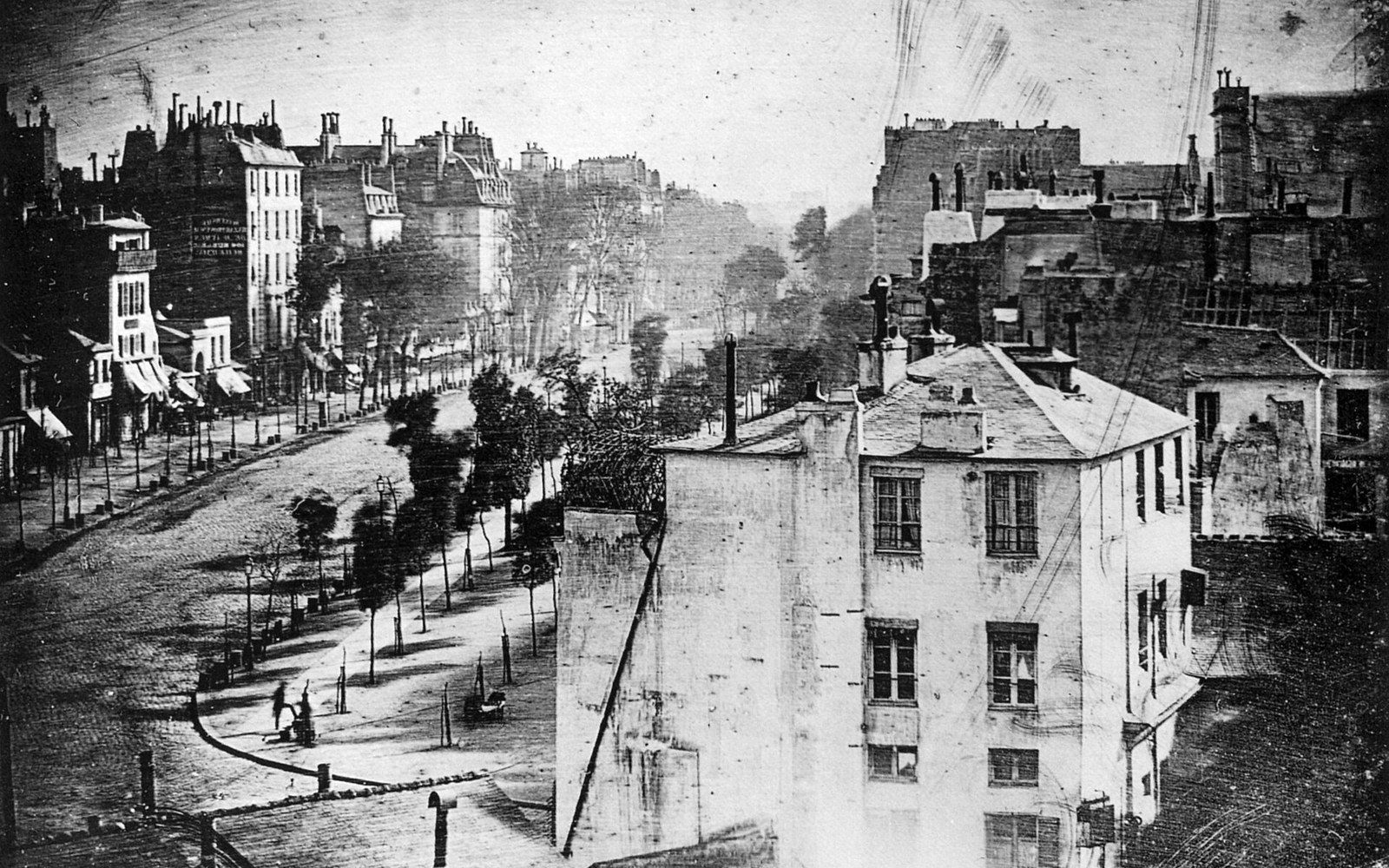
What Talbot had, and Daguerre emphatically did not, was a paper negative. A daguerreotype is a unique object: one exposure, one image, made on a silvered copper plate. There is no intermediate stage, nothing to print from. The calotype negative, fixed in hyposulphite of soda, could be oiled or waxed to make it translucent, then laid against fresh sensitised paper and contact-printed in daylight as many times as the owner wished.
The copy was now the fundamental unit of photography, and every reproducible medium — from the albumen print to the gelatin silver darkroom print — follows the logic Talbot established at Lacock Abbey in Wiltshire.
The cost of this was sharpness. Paper fibres interrupted the image on the way in and on the way out: the grain of the paper support is present in every calotype print, softening detail that the daguerreotype would have rendered with almost uncomfortable clarity. Contemporaries noticed. Daguerre's process seduced the public first, and Talbot's patents — applied more strictly in England than in Scotland, where much of the serious calotype portrait work consequently moved — kept his own method from spreading freely.
The look and the practitioners
Where the daguerreotype flattered faces with fine-grained silver, the calotype dissolved them slightly into their backgrounds, edges merging with shadow in a way that appealed to a certain photographic sensibility. Gustave Le Gray, working in France through the early 1850s, waxed his paper negatives before sensitisation rather than after, a refinement that increased translucency and pulled a little more detail from the process.
His landscapes and architectural studies demonstrated what calotype tonality could achieve in the right hands. David Octavius Hill and Robert Adamson, working in Edinburgh between 1843 and 1848, produced a body of calotype portraiture now understood as among the most accomplished photographic work of the nineteenth century.
Frederick Scott Archer's collodion process, published without patent in 1851, effectively ended the calotype's career. Collodion on glass gave the sharpness of the daguerreotype with the printability of the calotype, and it was free to use. The paper negative became a curiosity within a decade.
Frederick Scott Archer's collodion process, published without patent in 1851, effectively ended the calotype's career.
What it left behind was the architecture of photography as a medium: a light-sensitive surface makes a latent record; chemistry develops and fixes it; a positive is printed from the negative; the print is the object that circulates. Talbot described this logic in The Pencil of Nature, issued in parts between 1844 and 1846 — the first commercially published book illustrated with photographs, each print tipped in by hand. The images are soft. The idea inside them is not.