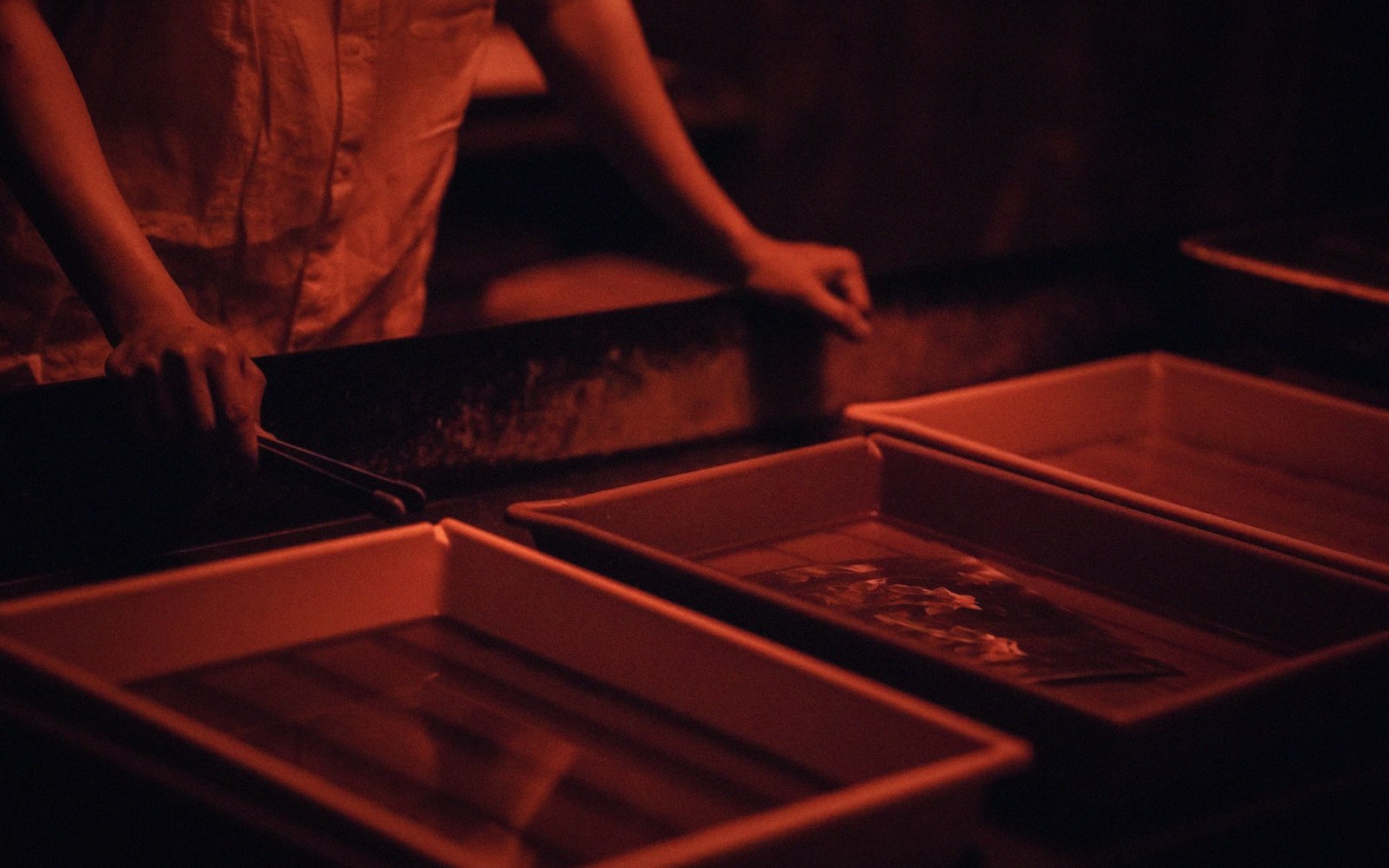
Dodging and burning
Holding light back or adding it, locally, by hand — the print as an interpretation rather than a readout.
Every entry is one process or step, what it demands, and the look that follows. Every photograph records what one surface, in one bath, under one lens, was able to hold.
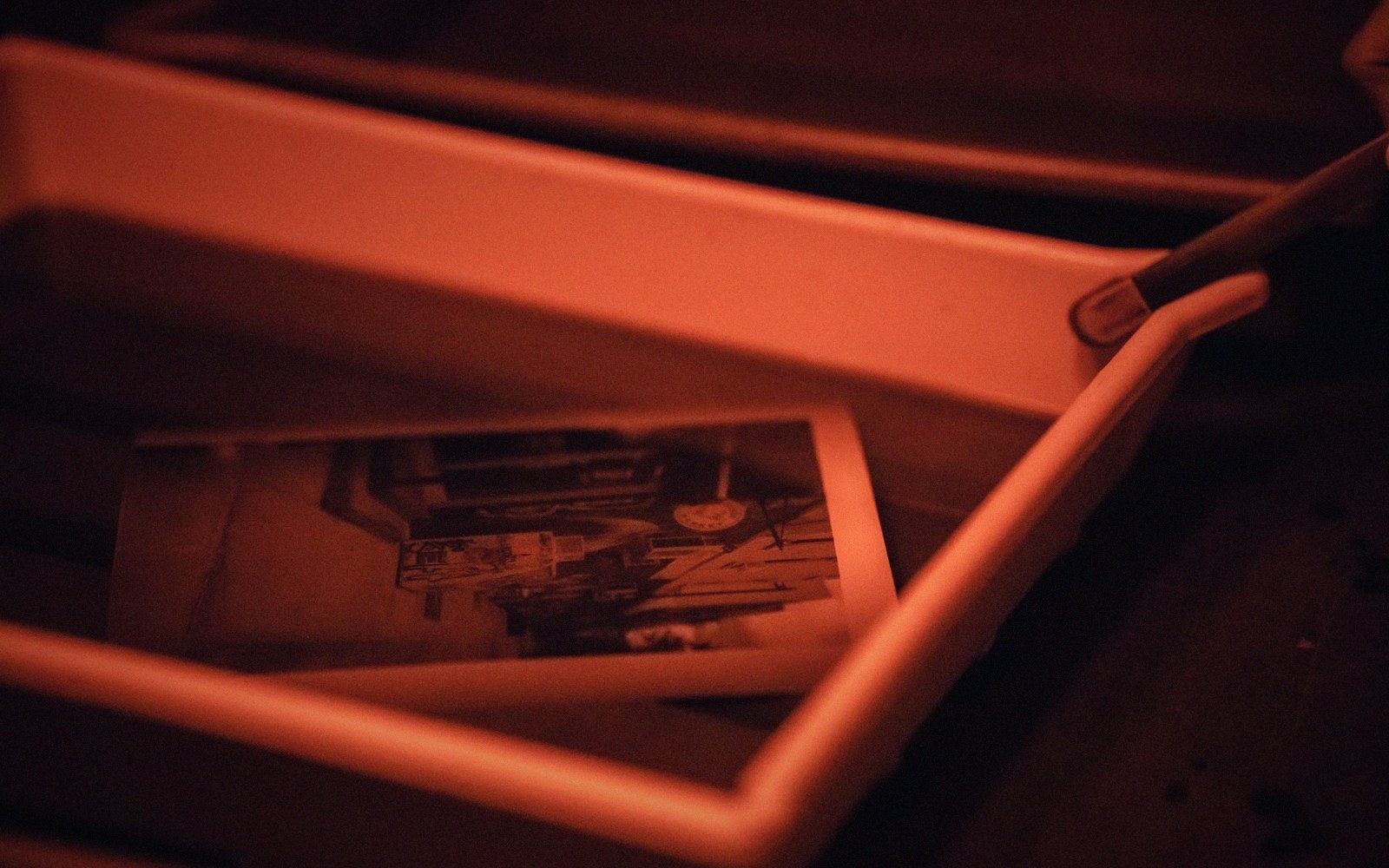
Frederick Scott Archer's 1851 process had to be coated, exposed and developed while wet, which is why the darkroom went into a cart.
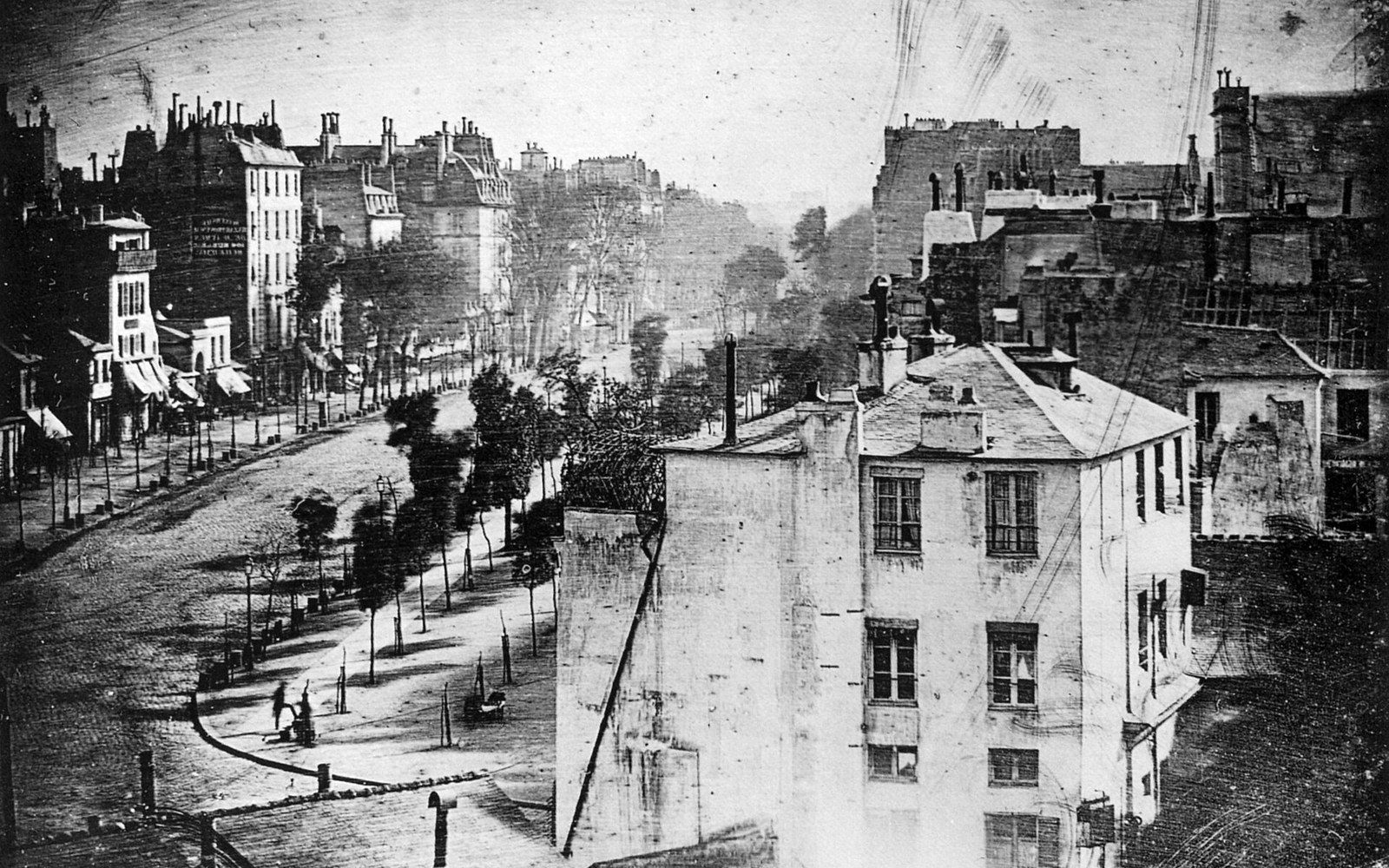
A mirror-surfaced silver plate with terrifying detail and no negative, so no copies existed — and Daguerre's 1838 Boulevard du Temple caught a man having his boots blacked, the first photograph of a person, only because he stood still.
There was no negative behind it, so there was no second copy — the picture and the thing were the same item.
| Surface | Made how | What it gave | Copies | |
|---|---|---|---|---|
| 01 | Silvered copper | Polished, fumed with iodine, developed over mercury vapour | Detail that holds under a loupe; a mirror surface read by tilting | None |
| 02 | Salted paper | Sensitised by hand, printed against the negative in daylight | A negative to print from; fibre diffusing the image into broad masses | A run |
| 03 | Wet collodion glass | Flowed, sensitised, exposed and developed on the spot, wet throughout | Glass sharpness with a printable negative; a darkroom that had to travel | A run |
| 04 | Gelatin dry plate | Coated and dried in a factory, boxed, stored, bought ready to use | Speed enough for a hand-held frame; the plate separated from the darkroom | A run |
| 05 | Three-layer colour film | Stacked emulsions, each sensitised to one part of the spectrum | Colour as a manufactured opinion — every stock biased differently | A run |
Holding light back or adding it, locally, by hand — the print as an interpretation rather than a readout.

Silver halide clumps are a physical structure, not a defect, and enlargement is what makes them visible.
An enlarger is a small studio: a lamp, a negative, a lens and a distance.
Raise the head and the projected image grows. Nothing else about the negative has changed, but three things about the print have.
What holds the image.
3 entries02Coated, exposed and developed before it dries.
3 entries03Light, time and what moves.
3 entries04Trays, safelight and sequence.
2 entries05Projection, and the print as a decision.
3 entries06Local control of the print.
2 entries07Why prints survive or do not.
2 entries08Three layers and their biases.
2 entries09The trade-offs change again.
2 entries