The twelve-minute window that changed field photography
Frederick Scott Archer published his wet collodion process in 1851, in The Chemist, without patenting it. That decision — whether principled or merely impractical — made the process effectively free to use, and within a few years it had displaced both the daguerreotype and the calotype almost entirely. What it offered was the best of both: the sharpness of a polished metal plate combined with a negative from which any number of prints could be made. What it demanded, in return, was speed.
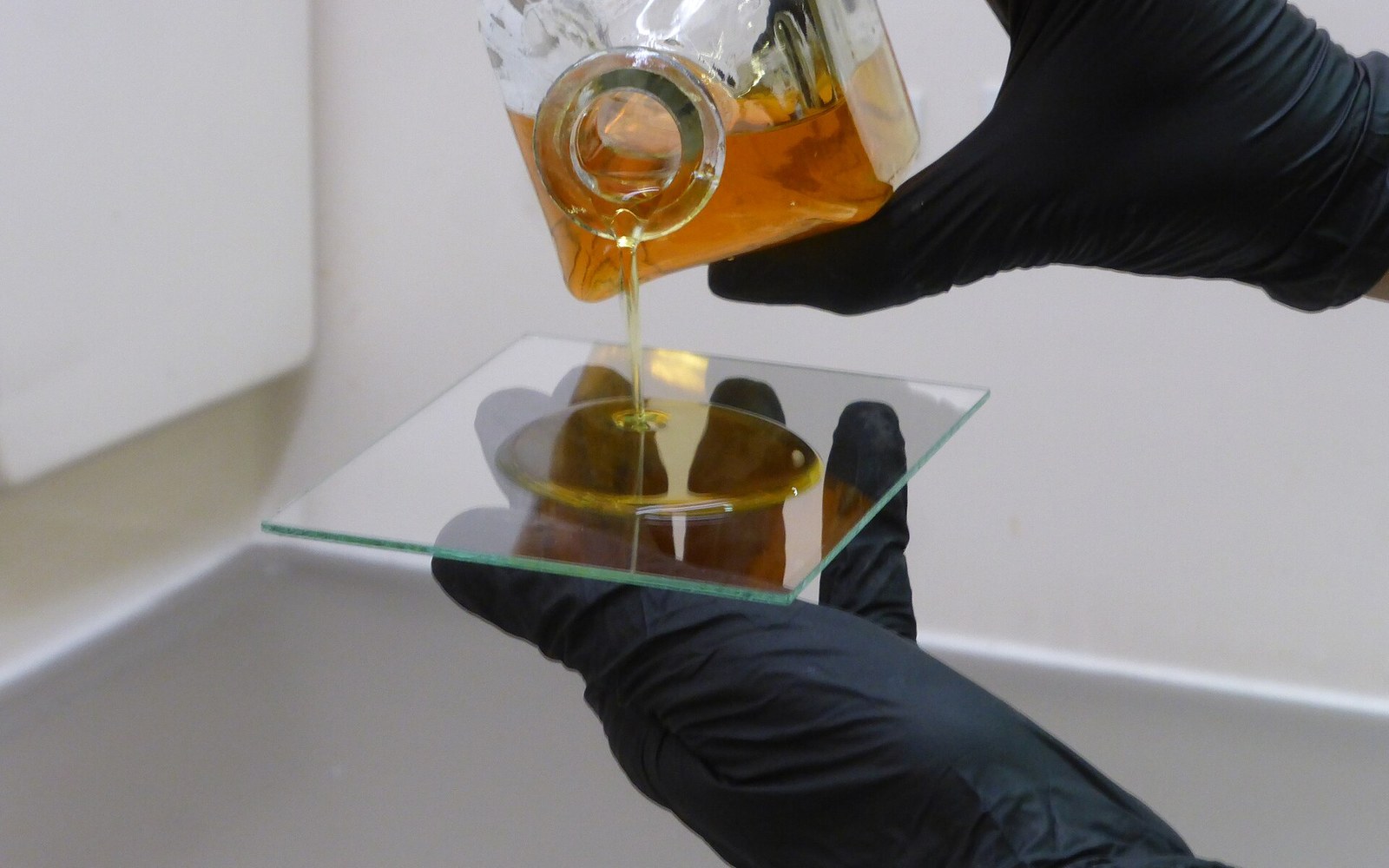
Collodion itself is a solution of gun-cotton (nitrocellulose) in ether and alcohol. When poured onto a glass plate and tilted to spread it evenly, the solvents begin evaporating at once, leaving a thin, slightly tacky film. While still tacky — not fully dry — the plate is immersed in a bath of silver nitrate, which reacts with potassium iodide already dissolved in the collodion to form light-sensitive silver iodide within the film.
The plate must be exposed in the camera and developed before the collodion dries completely. Once dry, the film becomes impermeable: the developing chemistry can no longer penetrate it, and the plate is ruined. That window runs to perhaps ten or twelve minutes in temperate conditions, and closes faster in summer heat.
Coating, exposure, development — in unbroken sequence
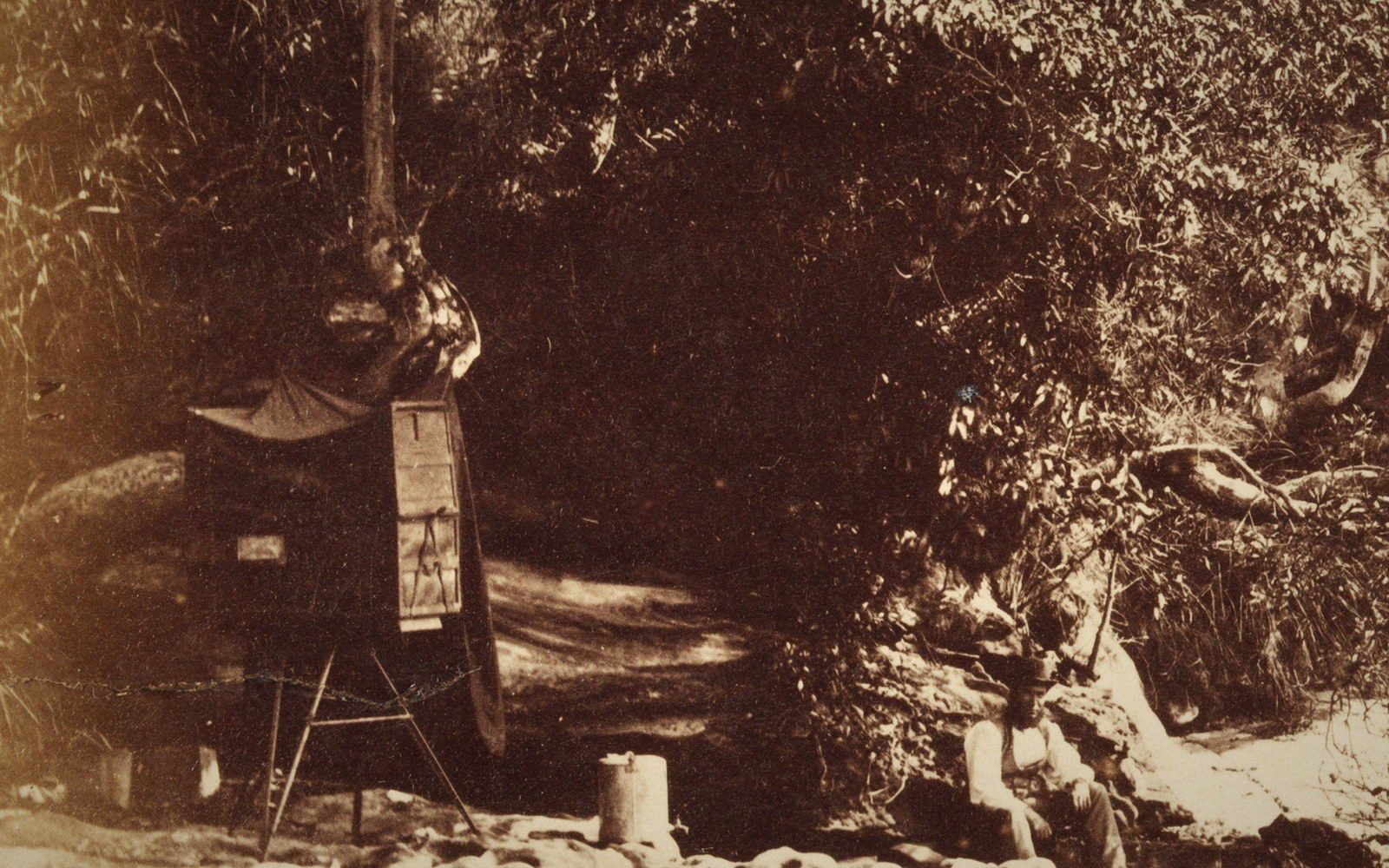
The practical consequence of this chemistry was radical. A photographer working outdoors could not coat a plate in a studio and carry it to a location. Everything had to happen in sequence and in proximity: coat the plate, sensitise it, load it into a dark slide, expose it in the camera, return it to the darkroom, develop it — all before twelve minutes had elapsed.
The field darkroom became a necessity rather than a convenience, whether it was a horse-drawn van on a country road, a tent pitched beside a ruin, or the portable kit that photographers carried into the American Civil War.
Development used pyrogallol or iron sulphate poured across the plate's surface while the photographer rocked it gently; the image appeared in seconds. A bath of sodium thiosulphate fixed it by dissolving away the remaining unexposed silver salts — the same chemistry that fixes silver-gelatin paper today. After washing, the plate could be varnished for protection. The resulting negative, viewed against a dark background, could also be presented as a positive — the ambrotype, a cheaper cousin of the daguerreotype that required no silver-polished copper and no mercury fuming.
The collodion film on glass had one further advantage: it was dimensionally stable and retained extraordinary fine detail. When printed by contact onto albumen paper — egg-white emulsion coated on thin paper stock — the results rivalled anything the daguerreotype had produced in resolution, while generating an actual negative that survived handling and could be reprinted at will.
Nadar, working in Paris from the 1850s onward, used the wet plate to make portraits of sustained tonal richness and psychological presence. Gustave Le Gray, also in Paris, pushed the process to its physical limits — his seascape studies required two separate negatives, sky and sea, printed together on a single sheet, because no single plate's exposure latitude could handle both. Roger Fenton carried a converted wine merchant's van to the Crimea in 1855. In each case the chemistry set the constraints and the photographer worked inside them.
By the late 1870s, factory-made dry gelatin plates — sensitive enough to expose without any wet preparation — began to make the wet plate look laborious. They were. Eastman Kodak's arrival with roll film in the 1880s completed the displacement. But the wet-plate look — its edge vignetting, the marks left by uneven pour, the particular tonal weight of a thin collodion negative on glass — is specific to the process and unrepeatable by other means. Photographers working with collodion today do so knowing that the twelve-minute clock is still running.