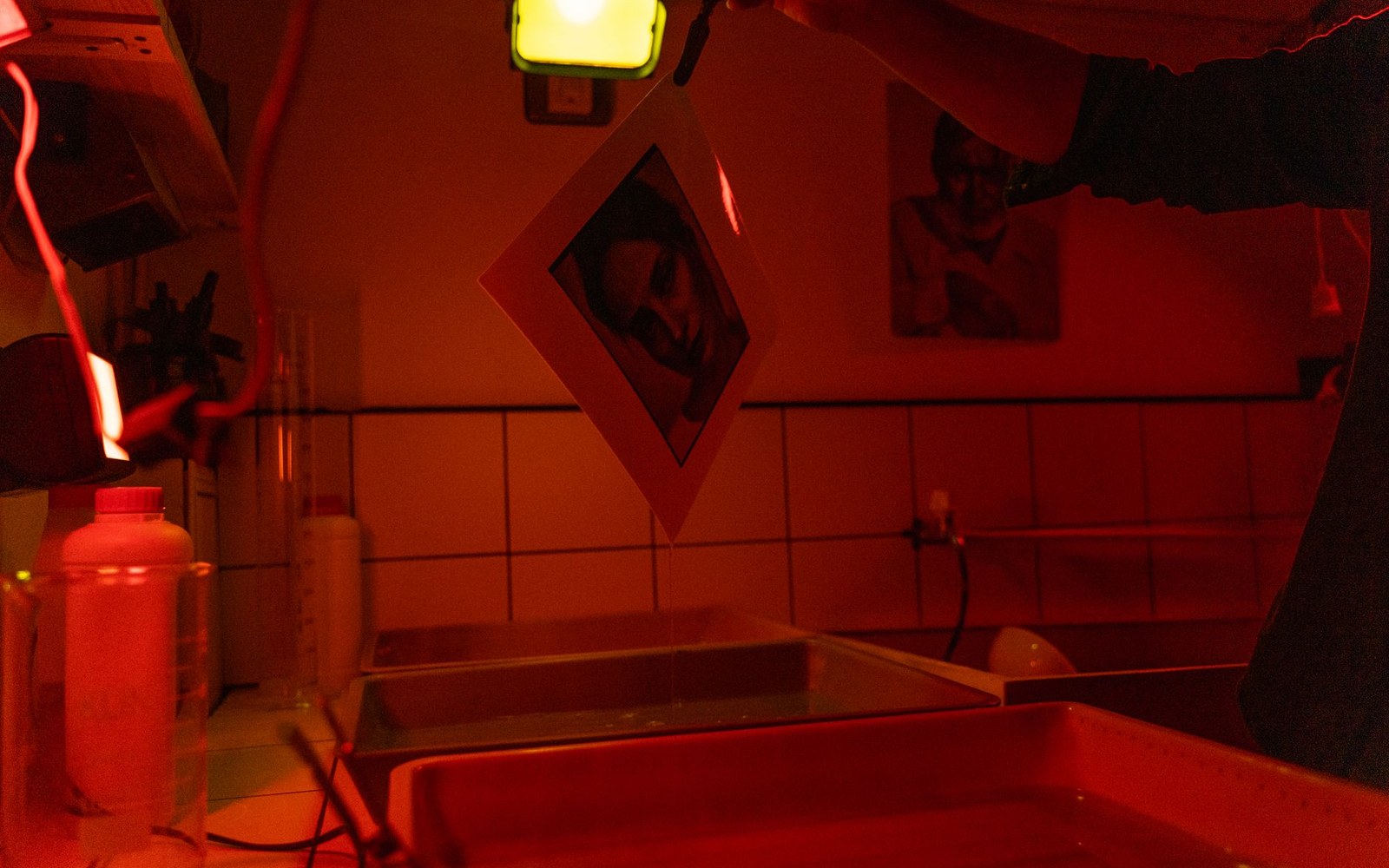
Safe for what, exactly?
A safelight is not a dim light. It is a light filtered to wavelengths the emulsion in use cannot record — a distinction that matters enormously, because the wrong safelight will fog your paper just as effectively as switching on the room light, only more slowly and therefore more deceptively.
Orthochromatic emulsions — the dominant type through much of the nineteenth and early twentieth centuries — are sensitive to blue and green but blind to red. This is why the amber-red darkroom of the wet-plate era worked: collodion, silver-chloride gaslight papers and early bromide papers all sat happily under a ruby lantern. Frederick Scott Archer's wet-plate workers in the 1850s could see what they were doing at the dish, which was a genuine practical luxury compared with working in total darkness.
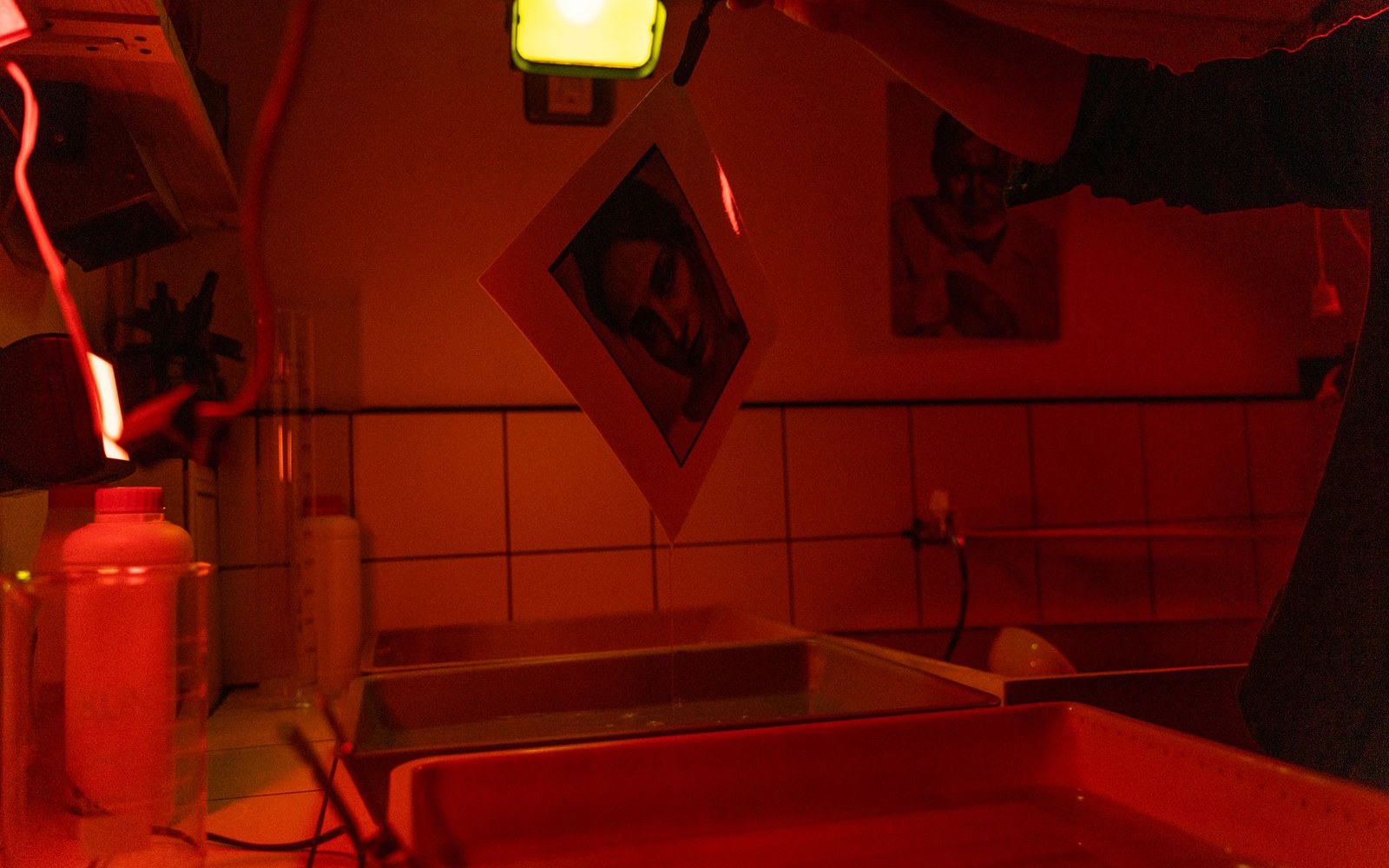
Panchromatic film changed everything. Sensitive across the full visible spectrum — by design, so that reds and greens rendered in their natural tonal relationship — panchromatic film cannot tolerate any coloured light at low enough intensity to see by. Reciprocity failure is one thing; fogging from a safelight is another and far less forgiving. Panchromatic film is loaded and processed in complete darkness, and no safelight is safe for it.
Variable-contrast printing papers occupy a middle position. They are sensitive to blue and green — the two channels that control contrast grade — but most are manufactured with enough red insensitivity that a dim OC (orange-amber) safelight at a metre or more is acceptable. Ilford's recommendations for their Multigrade papers specify both the filter type and the minimum working distance, because even a correct safelight fogs if it is too close or the paper lies under it too long. The safelight is not unconditional; it is a tolerance.
The practical test is simple and old: lay a coin on a sheet of unexposed paper under your safelight, leave it for the longest time you'd normally work, process the sheet, and look for a coin-shaped shadow. No shadow, no problem. A visible shadow means either the light is too close, too bright or the wrong colour — and the paper has been telling you so silently on every print you thought was clean.
Colour-sensitive materials — reversal films, negative films, colour printing papers — are processed either in total darkness or in purpose-built light-tight drums. There is no safelight for them. The question the safelight answers is always the same: what can this emulsion afford not to see?