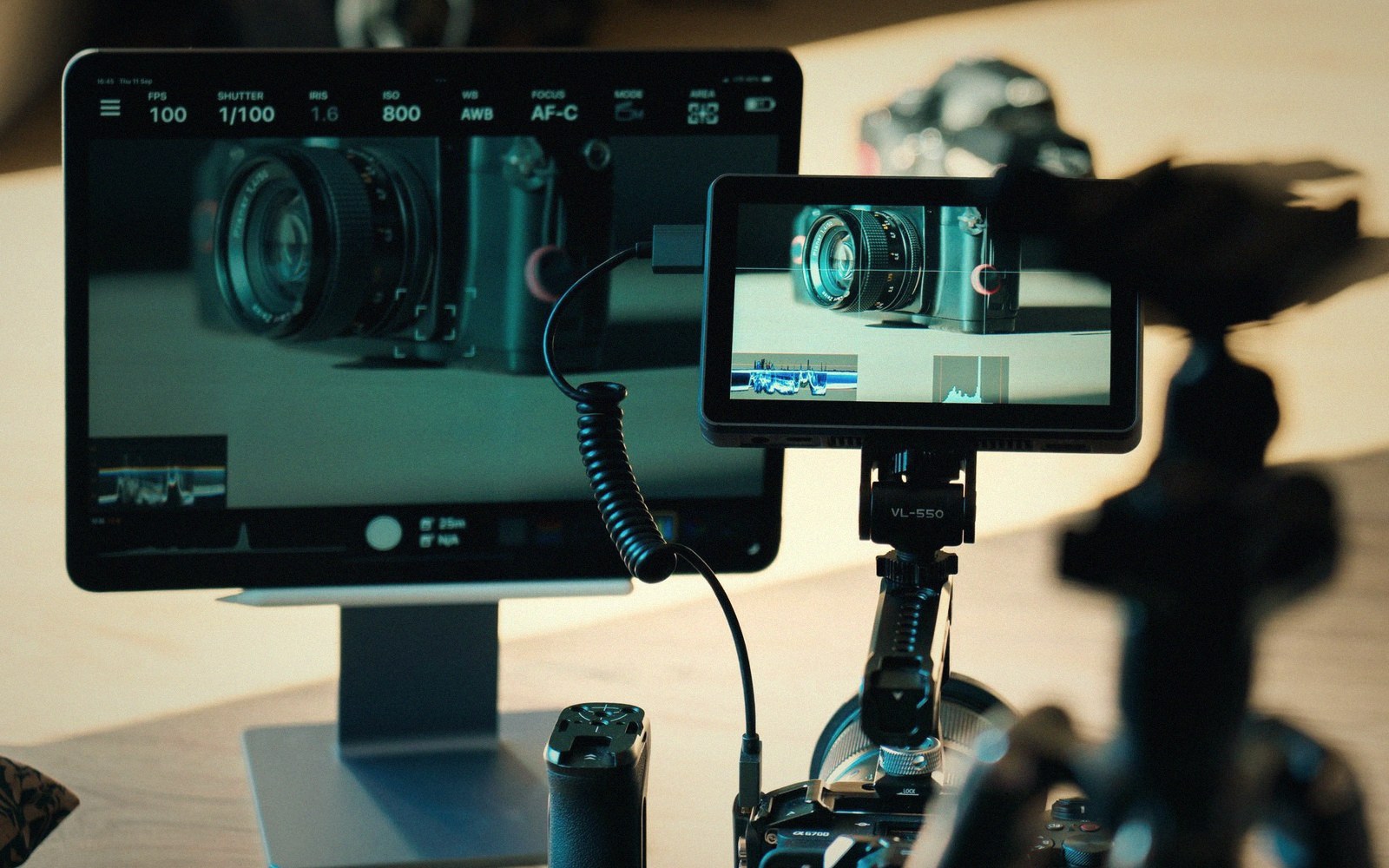
The Sensor's Latent Image
A raw file is not a photograph. It is a record of photon counts at each photosite, stored before any interpretation has been applied. The camera writes the data as the sensor captured it — linear, undemosaiced, unsharpened — and stops there. Everything that follows is the equivalent of darkroom work.
The parallel with a negative is precise. Silver on film does not become a photograph until chemistry and light act on it in sequence: developer, stop, fix, wash, then the enlarger and the paper. A raw file holds its image in the same suspended state.
Open it in any raw converter — Adobe Camera Raw, Capture One, Lightroom, RawTherapee — and you are standing at the enlarger. White balance is the colour of the enlarger light. Exposure compensation is the exposure time on the baseboard. Tone curves are dodging and burning at the global level before you reach the local tools.
The demosaicing step, in which the converter interpolates full colour from the Bayer or X-Trans mosaic each sensor uses, has no exact analogue in silver photography; it is the digital process's own peculiarity. But once colour is reconstructed, every subsequent decision — how much contrast, how much shadow detail to lift, how far to push the highlights before they clip — is structurally identical to what a printer chooses at the enlarger.
This is why shooting raw and shooting JPEG are genuinely different philosophies. A JPEG is a contact print made in-camera by the manufacturer's own recipe, one that cannot be reversed without visible damage. A raw file hands the negative back to the maker.
The camera's picture profile, its sharpening algorithm, its noise reduction — none of it touches the underlying data. The same capture can yield a flat, low-contrast study or a dense, high-shadow rendering, depending on the instructions applied later, exactly as the same negative can yield different prints depending on who is printing it and why.
The freedom carries a cost familiar from the wet darkroom: time, judgment and the possibility of making the wrong call.
The freedom carries a cost familiar from the wet darkroom: time, judgment and the possibility of making the wrong call. A raw converter's default render is not neutral; it is still somebody's opinion of what a photograph should look like, just somebody else's. The practitioner who processes their own raw files is not correcting the camera — they are printing.