
The plate that painted with starch
The Lumière brothers — Auguste and Louis, the same Lyon industrialists who built the cinematograph — patented the autochrome process in 1903 and brought it to market in 1907. It was not the first colour photography, but it was the first that a working photographer could actually buy and use without managing three separate exposures or elaborate registration. A single plate, a single exposure, a passable likeness of colour: the autochrome delivered all three, and it did so by means of potato starch.
The mechanics are straightforward. Finely milled starch grains — each a few micrometres across — were dyed in three colours: orange-red, green, and violet. The Lumière factory at Lyon tumbled batches of these grains together and spread them as a random mosaic onto a glass plate coated with a thin layer of varnish.
The gaps between grains were filled with carbon black to prevent unfiltered light from passing through. A protective varnish sealed the layer, and over it went a conventional panchromatic silver-halide emulsion. The whole stack was then exposed through the glass, so light passed through the starch screen before it reached the emulsion.
Each coloured grain acted as a tiny filter. Only the wavelengths it passed through reached the silver beneath. After exposure the plate was reversal-processed — developed, then chemically fogged and developed again — to yield a positive transparency.
When you held the result up to light, each grain either blocked or passed light according to whether the emulsion behind it had been exposed, and the mosaic resolved, at viewing distance, into a continuous-tone colour image by additive mixing. The eye did the rest, blending adjacent orange, green and violet points into approximate hues, exactly as a pointillist canvas exploits persistence of vision.
The starch mosaic contains roughly four million grains per square inch, which sounds dense until you compare it with a modern sensor. At any normal viewing distance the grid is invisible — yet it is never quite absent.
Autochrome transparencies have a characteristic softness, not from poor resolution in the emulsion but from the mosaic screen itself, whose coarse grains and scattered light blur fine detail, and whose dyed grains each transmit only a fraction of the available light, so the effective speed of the plate is low, roughly ISO 1–2 by modern equivalence. Long exposures in good light were necessary, and movement blurred or vanished — a constraint that shaped the subjects autochromes tend to contain. Gardens, portraits in diffused outdoor light, still arrangements: the process pushed its users toward stillness and toward luminous open shade.
The colour palette reinforces the dreamy quality that autochromes are known for. Starch grains dye unevenly, and the three-colour balance shifts from plate to plate and batch to batch. Blues and violets tend to be cooler and more saturated than they would appear on later colour materials; skin tones go warm and golden; greens slide toward olive or teal.
The starch mosaic contains roughly four million grains per square inch, which sounds dense until you compare it with a modern sensor.
These are not corrections waiting to happen — they are the process, the physical consequence of impure dyes and random grain distribution.
Among photographers who adopted the process quickly were many pictorialists, who embraced it precisely because the soft, pointillist character aligned with their ambitions. The process also attracted early photojournalists and scientific photographers drawn by its comparative ease of use.
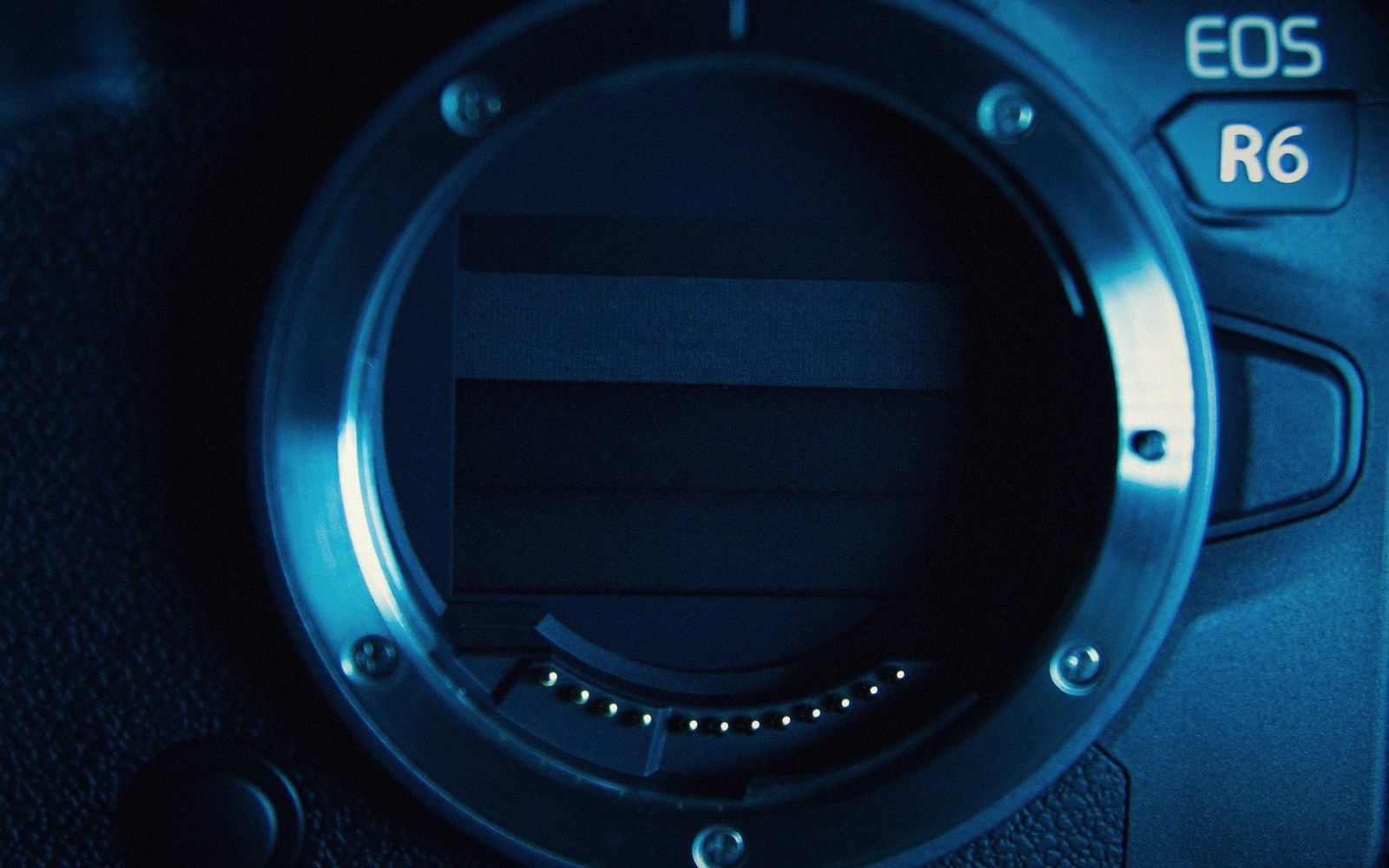
The autochrome remained in production, under that name, until 1935, when the Lumière company replaced it with a later screen-plate product. By then Kodachrome was on the horizon, and the era of dye-coupler three-layer film was beginning. The autochrome did not survive as a working material, but its logic — filter array over photosite, mosaic reconstructed by averaging — did. Every Bayer-pattern digital sensor uses an architecturally identical idea: a colour filter array over a light-sensitive layer, with software doing what potato starch and human vision did before it.